To get your cooking right every time, you need two tools: a timer to control time and a probe thermometer to check the core temperature. The timer saves you from overcooked pasta and failed eggs; the thermometer guarantees juicy meat, fully cooked poultry and frying oil at the right heat. Here is how to choose them and use them well.
Why the recipe time is not always enough
A recipe gives you a time, but every oven, hob and cut of meat is different. A thicker roast, a hotter pan or an oven that heats less evenly, and the result changes. The timer makes sure you forget nothing; the thermometer tells you exactly how far the cooking has gone. Together, they replace guesswork with precision.
Kitchen timer: mechanical, digital or LED?
Three families of timers share our kitchens. The right choice depends on how precise you need to be and how you feel about batteries.
| Type | Strengths | Limits | Best for |
|---|---|---|---|
| Mechanical | No battery, always ready, loud clear ring | Precise to the minute, 60 min maximum | Eggs, pasta, rice, simple baking |
| Digital LCD | Precise to the second, countdown and stopwatch | Runs on a battery | Technical cooking, chocolate, tea |
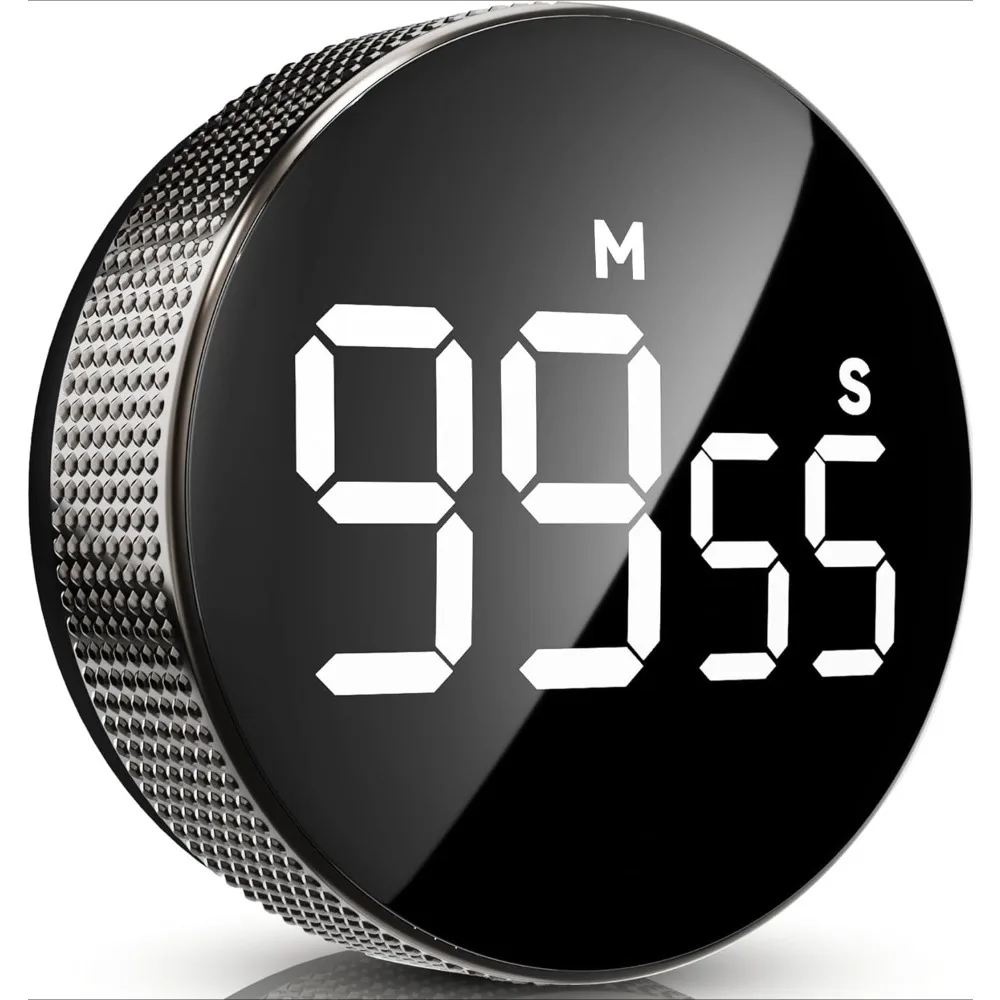
| Large LED display | Readable from afar, loud 85 dB alarm | Runs on batteries | Family cooking, oven dishes |
Mechanical, no battery. The magnetic stainless-steel mechanical timer winds up with a twist of the wrist and sticks to the fridge or cooker hood. The egg-shaped timer sits on the worktop and counts up to 60 minutes.
Precise to the second. The magnetic digital LCD timer shows the seconds and doubles as a stopwatch. To read it from across the room, the magnetic LED timer has a large backlit display and an 85 dB alarm that keeps ringing until you stop it.
The probe thermometer: the key to perfect cooking
A probe thermometer measures the temperature at the core of the food, where the cooking really happens. It is the only reliable way to know whether a roast is rare or medium, whether a chicken is cooked without being dry, or whether the frying oil is at the right temperature. The digital probe kitchen thermometer reads from -50 °C to +300 °C in 2 to 3 seconds, accurate to ±1 °C: it works for meat as well as caramel, chocolate and frying.
Core temperatures worth knowing
| Food | Core temperature |
|---|---|
| Beef, rare | about 55 °C |
| Beef, medium | about 63 °C |
| Beef, well done | about 72 °C |
| Poultry | 75 °C |
| Minced meat | 71 °C |
| Pork (roast, tenderloin) | 65 to 70 °C |
| Salmon, just cooked | 50 to 55 °C |
| Homemade bread | 93 to 96 °C |
| Frying oil | 160 to 180 °C |
| Tempered dark chocolate | 31 to 32 °C |
These are common kitchen guidelines. For poultry and minced meat, always cook all the way through.
How to use your timer and thermometer well
- Insert the probe in the centre of the thickest part, without touching the bone or the bottom of the dish.
- Allow for resting: meat keeps cooking by 2 to 5 °C off the heat; take it out just before the target temperature.
- One timer per dish: when several things cook at once, two timers prevent mistakes.
- Keep it in sight: magnetic models stay on the fridge, the cooker hood or the oven door.
- Clean the probe in hot soapy water after each use, especially between raw and cooked meat.
Recommended products
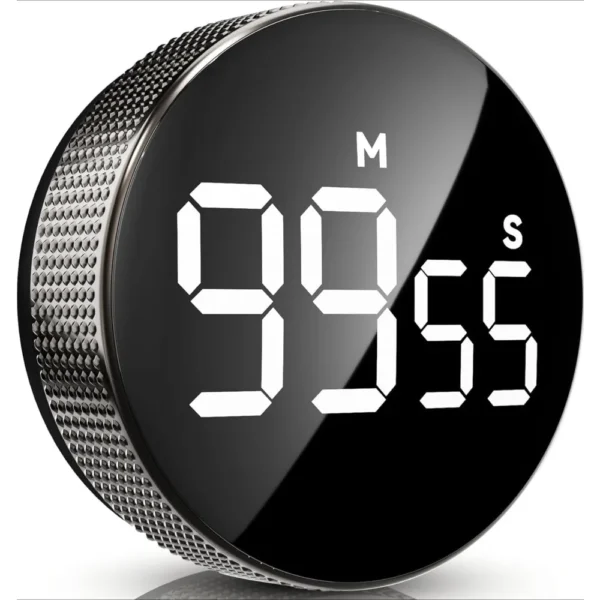
Magnetic LED Kitchen Timer – Second-Precision for Perfect Cooking Times
Original price was: 25,90€.18,90€Current price is: 18,90€.
View product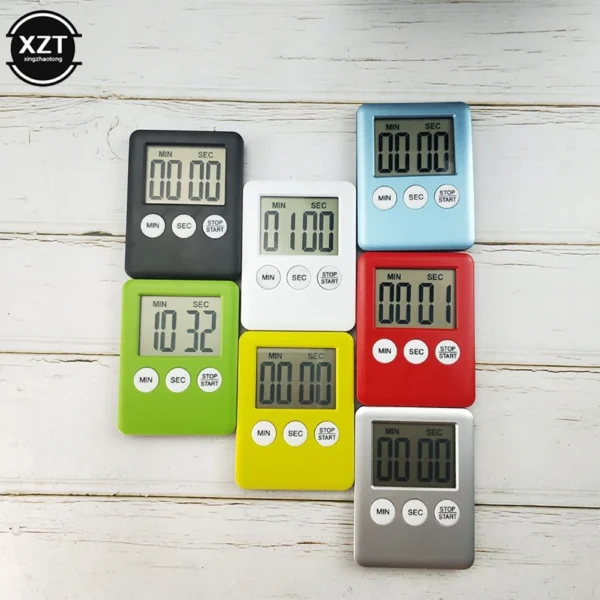
Digital Magnetic Kitchen Timer LCD – Second-Precise Countdown
Original price was: 18,90€.14,90€Current price is: 14,90€.
View product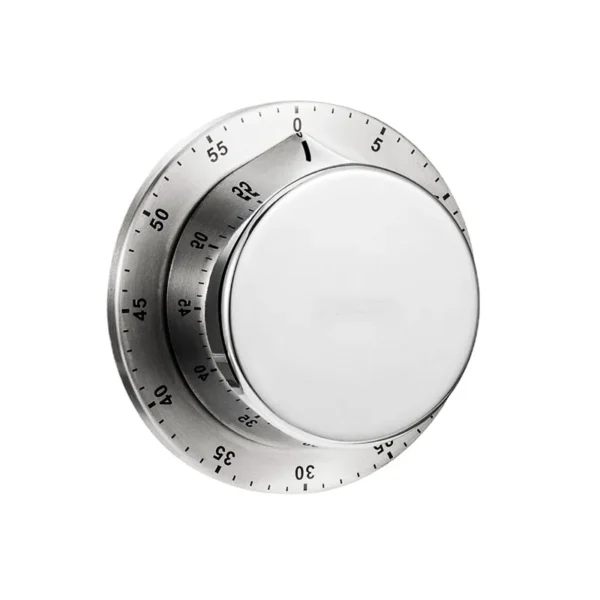
Mechanical Magnetic Kitchen Timer Stainless Steel — Battery-Free, Butterfly Design, 60 Min
Original price was: 36,90€.28,90€Current price is: 28,90€.
View product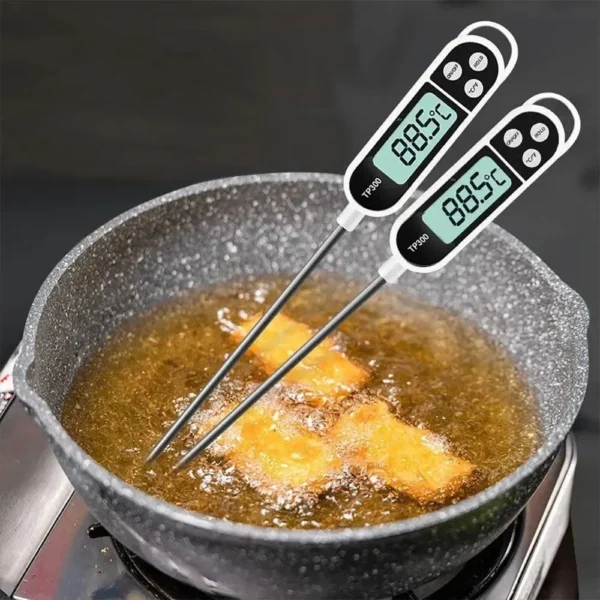
Digital Kitchen Thermometer with Probe – Instant Read -50° to +300°C
Original price was: 22,90€.14,90€Current price is: 14,90€.
View productFAQ — Kitchen timer and thermometer
Which kitchen timer should I choose?
A mechanical timer is enough for eggs, pasta and rice, and never needs a battery. For precision to the second (soft-boiled eggs, chocolate, tea), choose a digital or LED timer.
Is a kitchen thermometer really useful?
Yes: it is the only reliable way to know the core temperature. It prevents overcooked meat, undercooked poultry and frying oil that is too hot.
Where should I insert the thermometer probe?
In the centre of the thickest part, away from the bone: bone conducts heat and would distort the reading.
How long should I boil an egg?
In boiling water: 3 minutes for a runny egg, 6 minutes for a soft-boiled egg, 9 to 10 minutes for a hard-boiled egg, then plunge it into cold water.
Find all our models in Kitchen Timers & Thermometers and our Precise Cooking range. Read also: 8 smart gadgets for perfect eggs and the perfect homemade burger guide.