A knife that no longer bites, that slides over the tomato and crushes the onion: it’s one of the most common kitchen annoyances. And contrary to popular belief, a blunt knife is more dangerous than a sharp one.
Good news: restoring pro-level sharpness to your blades is simple, quick and risk-free with the right tool and method. We’ll explain everything, step by step.
Why a knife goes blunt (and why to sharpen it)
With every cut, the blade’s edge folds over and wears microscopically. The result: you have to press harder, so you slip more easily. Sharpening regularly means:
- More safety: a blade that bites doesn’t slip.
- Clean cuts: tomatoes, herbs and meat without crushing.
- Less fatigue: you press less, the gesture is precise.
- Knives that last: regular care extends their life.
⭐ Our favourite
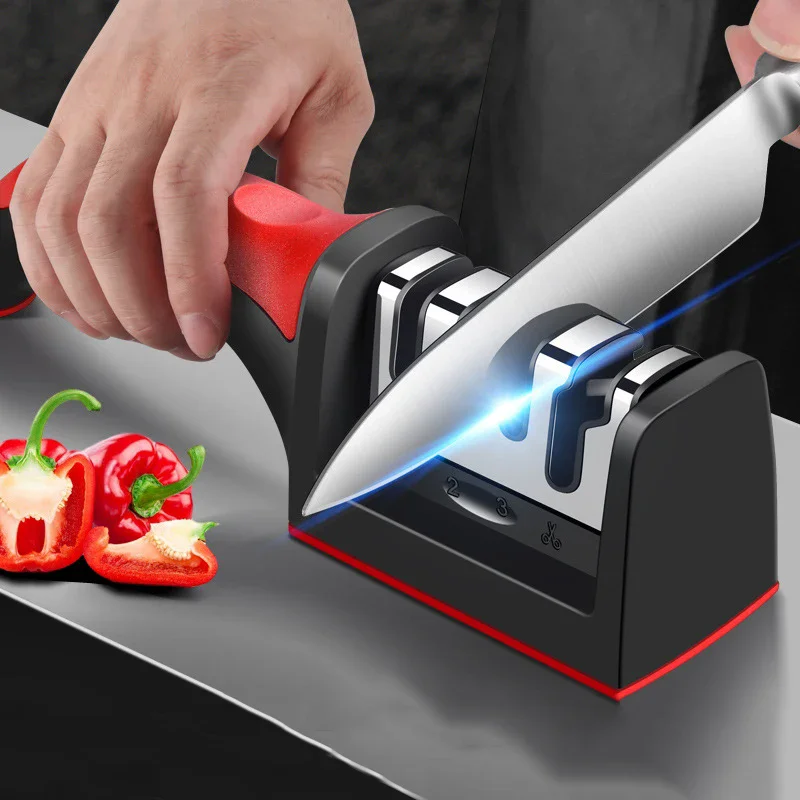
3-Stage Knife Sharpener – Restore, Sharpen and Polish in 3 Steps
Our favourite: the 3-stage knife sharpener. It sharpens, restores and polishes the blade in three guided passes — no angle to guess, a sharp, even result in seconds, completely safely.
Sharpen, hone, polish: what’s the difference?
These three terms often cause confusion. Yet they correspond to complementary steps in blade maintenance:
| Step | Role | Frequency | Tool |
|---|---|---|---|
| Restore | Reshape the worn edge | 1-2 times/year | Coarse stage |
| Sharpen | Sharpen the edge | Monthly | Fine stage / sharpener |
| Polish | Smooth and finish the blade | Every sharpening | Ceramic stage |
🔥 Best-seller
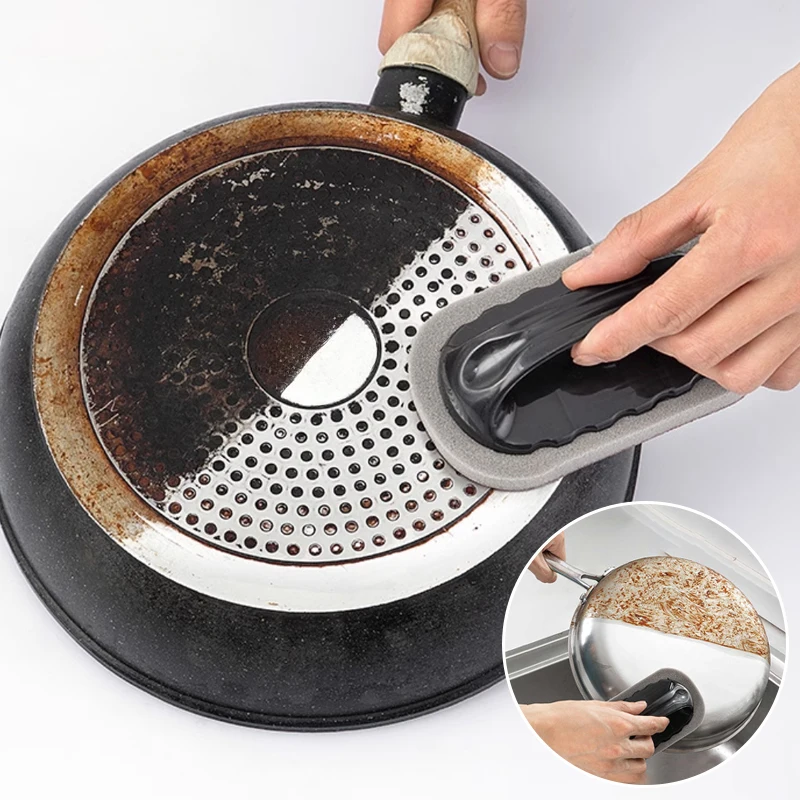
Magic Nano Emery Sponge + Knife Sharpener — Powerful Cleaning & Sharp Blades
Versatile best-seller: the double-sided nano emery magic sponge. One side degreases and brings shine, the other revives the edge of small blades — the clever ally for express daily upkeep.
The right method, step by step
With a sharpener with guided slots, the operation is within everyone’s reach. Follow these steps for an optimal result:
- Place the sharpener on a stable surface, one hand holding the base.
- Pull the blade from heel to tip, without pressing hard.
- Repeat 3 to 5 times per stage, from coarsest to finest.
- Wipe the blade with a damp cloth to remove metal residue.
💡 Chef’s tip — Test the edge safely on a sheet of paper held vertically: a well-sharpened blade slices it cleanly, without catching or tearing. Never on your finger!
Caring for your knives daily
A good sharpening is preserved by good habits: wash your knives by hand (never in the dishwasher, which attacks the edge), dry them at once, and use a wood or plastic board rather than glass or stone, which dull the blade. Store them on a magnetic bar or in a block, never loose in a drawer.
Frequently asked questions
How often should you sharpen knives?
A light sharpening once a month is enough for home use. A full restoration (coarse) once or twice a year gives badly worn blades their bite back.
Is a blunt knife dangerous?
Yes. A blade that doesn’t bite forces you to push and slips more easily, increasing the risk of cuts. A well-sharpened knife is safer.
Can all knives be sharpened the same way?
Western straight knives sharpen very well with a 3-stage sharpener. Japanese fine-angle or serrated knives require specific care.
In short
Sharpening your knives is a simple, quick and essential gesture for cooking with pleasure and safety. With a good 3-stage sharpener and regular care, your blades will stay sharp as on day one.